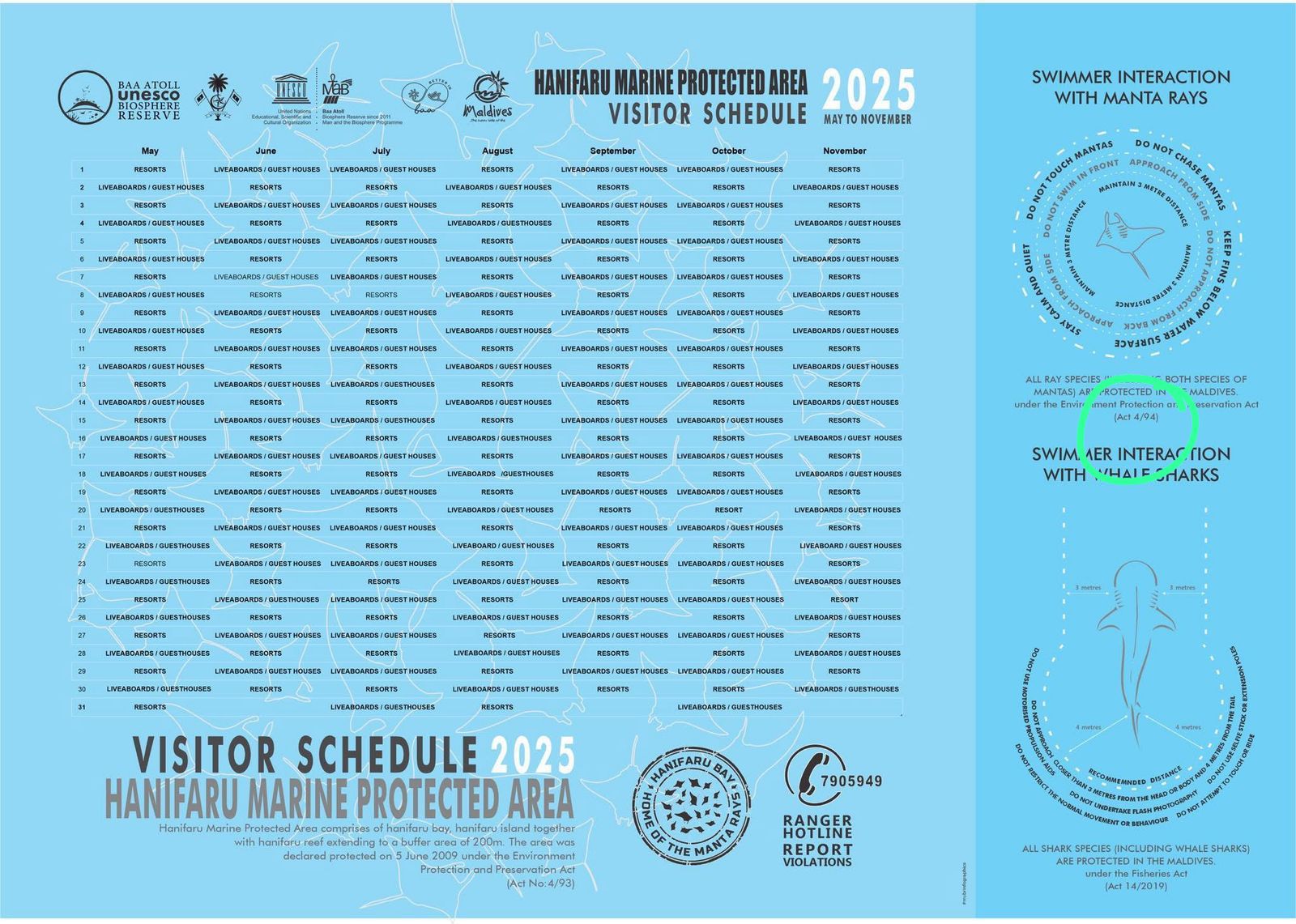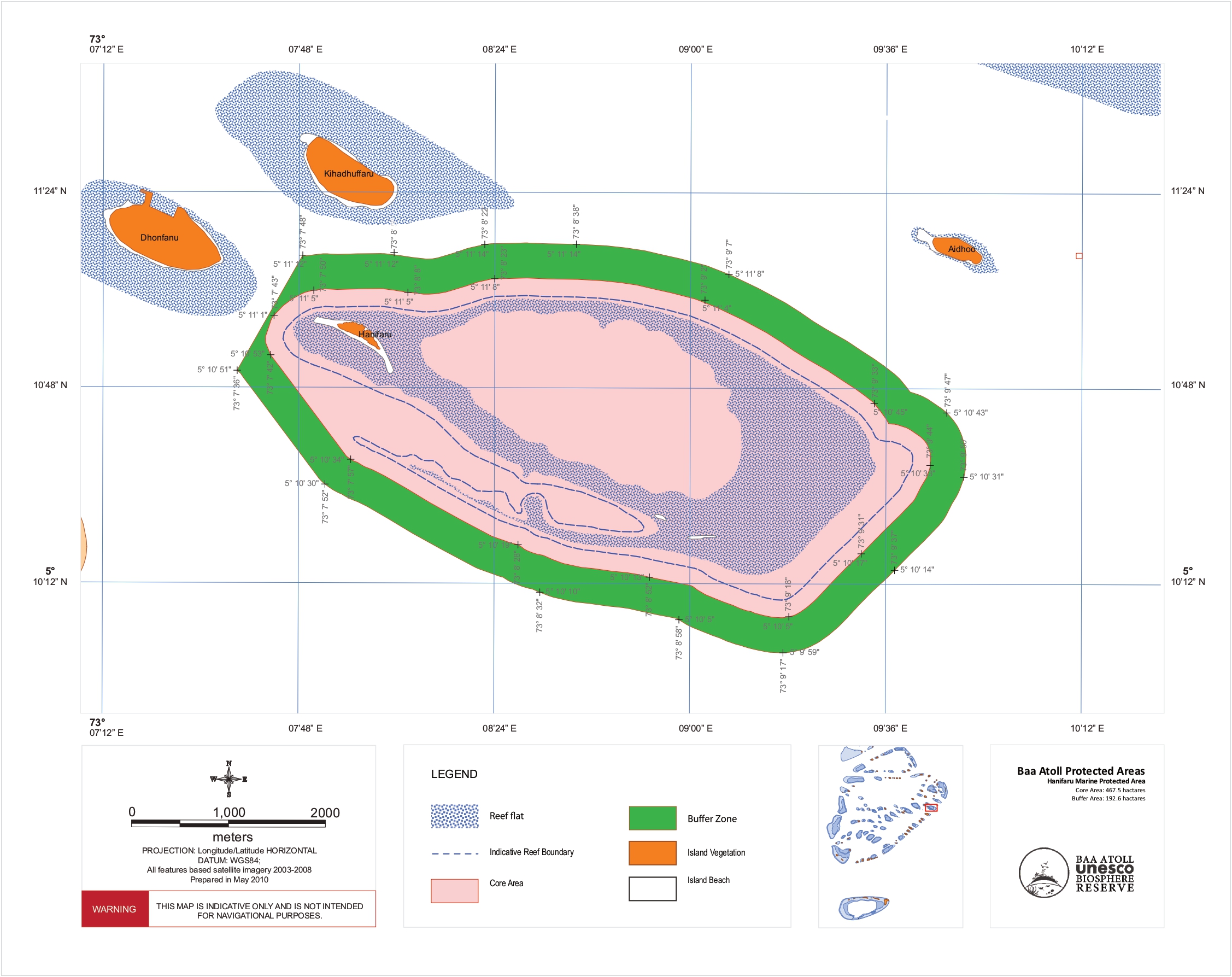
Hanifaru Marine Protected Area was declared a protected area on 5 June 2009 and Hanifaru Island was included as part of the protected area on 5 June 2011. Hanifaru Bay represents one of the most biologically significant marine environments in the Republic of Maldives. The site encompasses the uninhabited island of Hanifaru and its adjacent reef system, forming a highly productive marine habitat characterized by complex oceanographic dynamics.
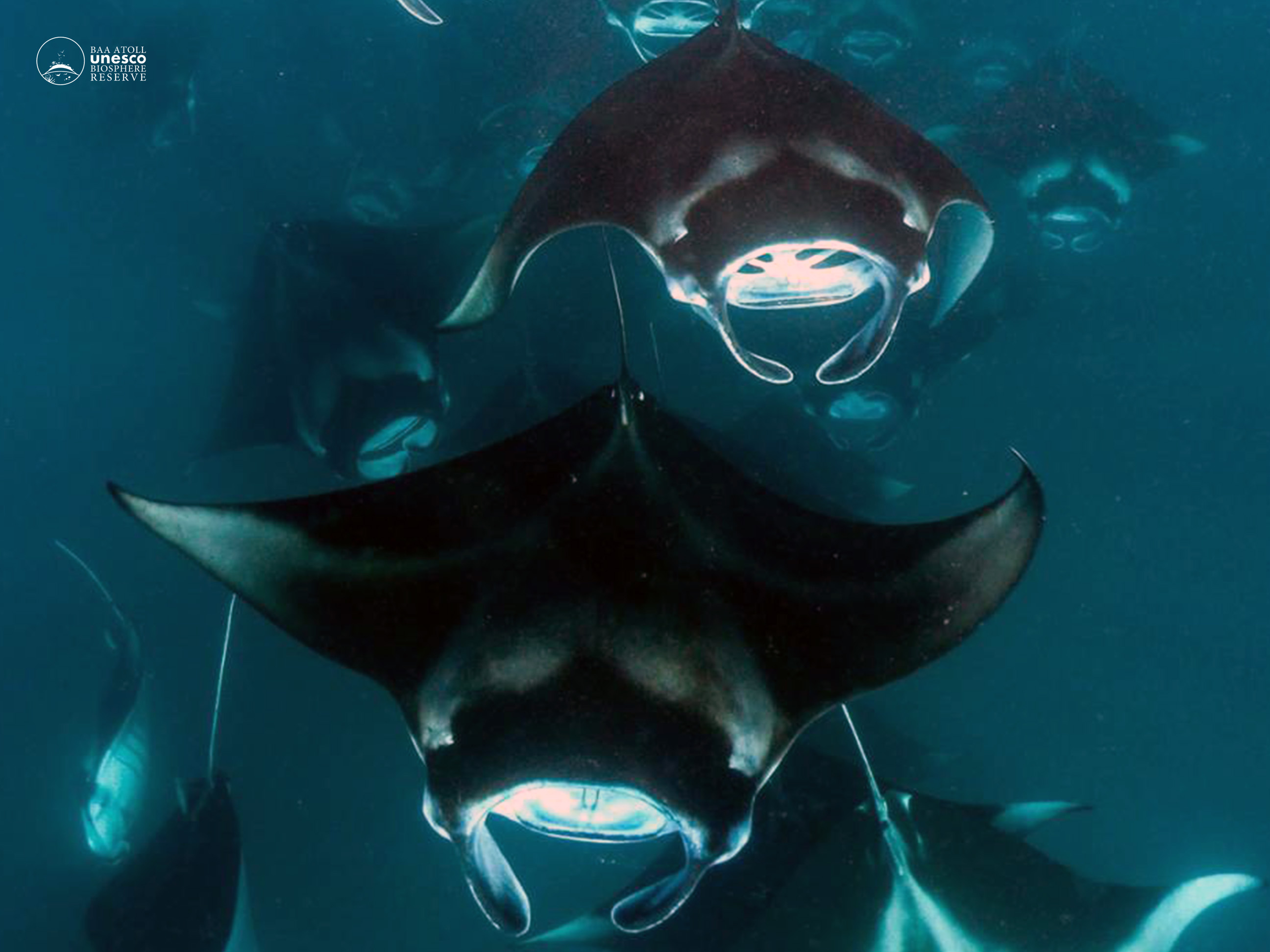
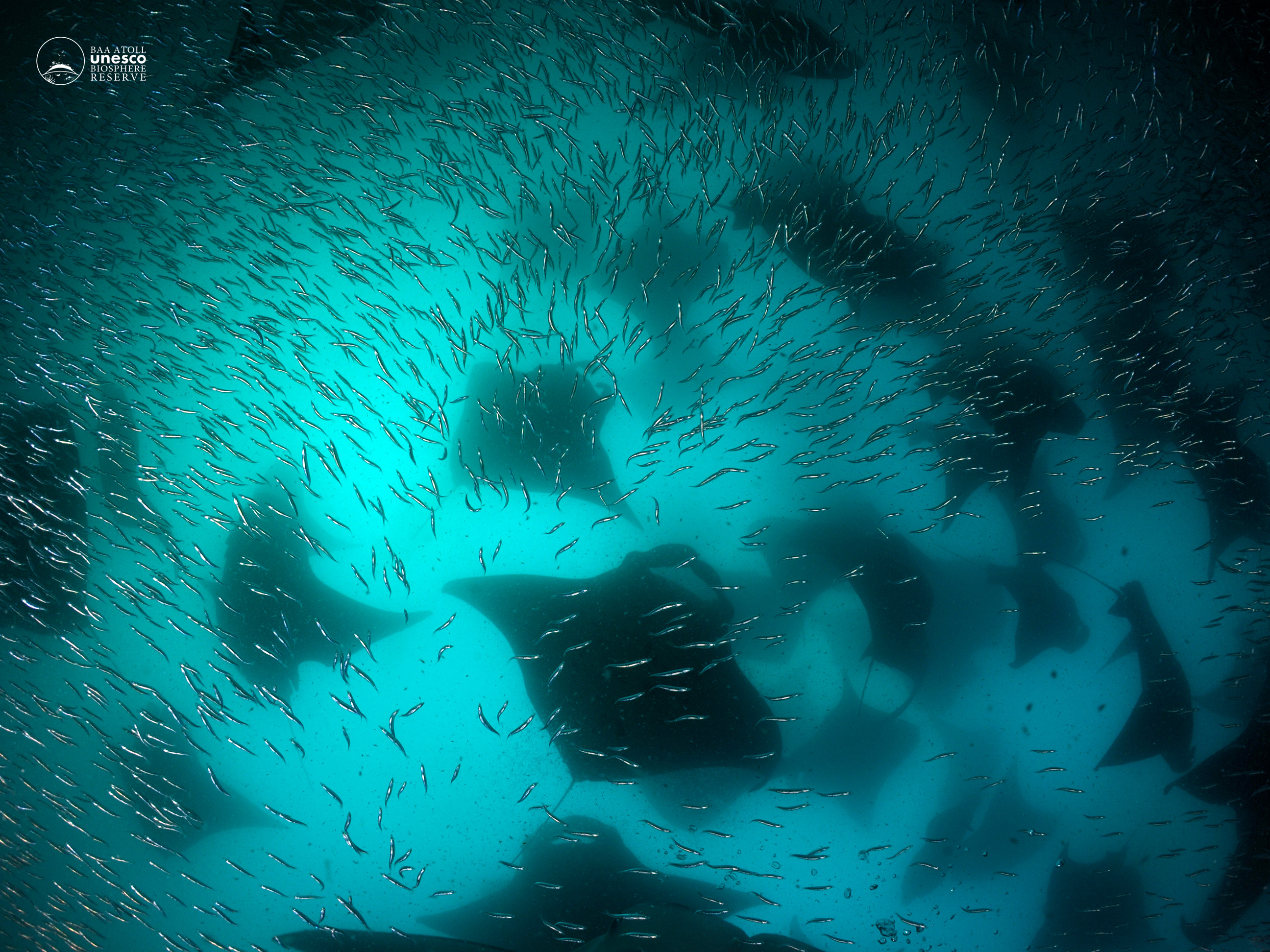
The bay’s unique hydrodynamic circulation system plays a critical role in its ecological significance. During the southwest (western) monsoon season, ocean currents and tidal patterns facilitate the aggregation of plankton within the enclosed lagoon. This seasonal phenomenon supports the temporary congregation of large planktivorous megafauna, notably reef manta rays (Mobula alfredi) and whale sharks (Rhincodon typus), which utilize the site for feeding and, in the case of manta rays, courtship and mating behaviors.
Hanifaru Island also provides important reproductive habitats for green turtles (Chelonia mydas) and hawksbill turtles (Eretmochelys imbricata), both classified as Endangered on the IUCN Red List. The area serves intermittently as a roosting and nesting site for seabirds, including the black-naped tern (Sterna sumatrana), lesser noddy (Anous tenuirostris), and brown noddy (Anous stolidus).
Due to its high species richness, endemism, and role as a critical habitat for threatened marine megafauna, Hanifaru Bay holds exceptional ecological and conservation value at both national and global levels. Its protection contributes significantly to the objectives of the Baa Atoll UNESCO Biosphere Reserve and to the broader goals of marine biodiversity conservation on a global scale, as the site is one of the few known locations where large aggregations of endangered megafauna can be reliably observed.